
One Simple Step To Prevent AKI

"The reduction of CM volume by the DyeVert™ System was associated with a significant reduction in AKI rate"
Briguori, et al C&CI 2020
Proven AKI reduction in real-world and clinical environments 2-9

Dedicated to Preventing AKI
Widespread problem.
Devastating impact.
Contrast-Induced Acute Kidney Injury (AKI) also known as Contrast-Induced Nephropathy (CIN) is a major and growing problem. A significant percentage of cath lab patients are at risk for AKI. And the consequences are severe, both clinically and financially.1
The DyeVert™ System is a simple solution to prevent AKI
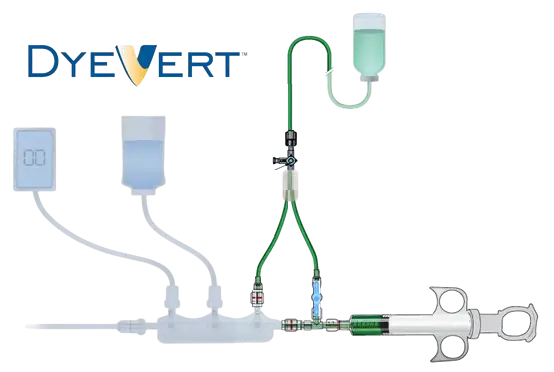
For investigational use only. Not yet approved by the U.S. FDA.
DEMONSTRATED EFFECTIVE
in preventing AKI in high-risk
patients 2-9
CONSISTENT REDUCTION
of delivered contrast averaging 40% 10
EASY-TO-USE
integrates seamlessly into coronary and peripheral angiography procedures
Who is at risk?
Patients with Chronic Kidney Disease (CKD) are at high risk for AKI. But they're not the only ones. A broad range of conditions commonly seen in cath labs elevate AKI risk. When you're treating these patients, the DyeVert provides the critical kidney protection they need.
Chronic kidney disease
Diabetes
Advanced age
Heart failure
STEMI
Complex procedure

About
NEPHROCOR MEDICAL
CLINICAL ABSTRACTS &
PUBLICATIONS
DYEVERT
PRESENTATIONS
1Castro D, Dang TT. Reducing contrast-induced acute kidney injury in the cath lab. Poster presentation at ACC National Cardiovascular Data Registry (NCDR) 2018 Annual Conference.
2Thukral N. Kidney care protocols in the cath lab. Transcatheter Cardiovascular Therapeutics 2019 Presentation. Accessed on October 14, 2019 from: https://www.tctmd.com/slide/aki-reduction-cath-lab-protocol-development-implementation-and-outcomes.
3Turner C, Tucker PA. Real-world impact of a quality improvement program for AKI prevention in the cardiac cath lab. SCAI Scientific Sessions Virtual Conference. Catheter & Cardiovasc Interv. 2020;95 (Supplement 2): S112-S113.
4Cameron A, Espinosa TJ. Reducing contrast-induced acute kidney injury in a cardiac catherization laboratory: a quality improvement initiative. SCAI Scientific Sessions Virtual Conference. Catheter & Cardiovasc Interv. 2020;95(Supplement 2):S25.
5Bunney R, Saenger E, Shah C, et al. Contemporary use of contrast dye reduction technology in a tertiary academic hospital: patient characteristics and acute kidney injury outcomes following percutaneous coronary interventions. Poster presented at ACC Quality Summit 2019; Poster 2018-063.
6Kutschman R. Clinical and economic outcomes of a comprehensive clinical quality initiative for reducing acute kidney injury in chronic kidney disease patients undergoing coronary angiography. JACC. 2019;74 (13 Suppl): B605.
7Sattar A, et al. Impact of using DyeVert Plus on incidence of acute kidney injury after cardiac catheterizations with coronary interventions in high risk patients. ACC Annual Meeting 2018; Charleston, WV.
8Briguori C, Golino M, Porchetta N, et al. Impact of a contrast media volume control device on acute kidney injury rate in patients with acute coronary syndrome. Catheter & Cardiovasc Interv. 2020 Jul 18. doi: 10.1002/ccd.29136.